
One in 12 heritage treasures at risk
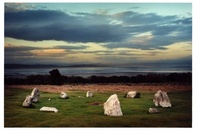 In every corner of England, our heritage is at risk. But how much of it? Where? What from? And what can be done to save it? To answer these questions Lord Bruce-Lockhart, Chairman of English Heritage, yesterday announced the completion of the first phase of a Domesday Book of the threatened parts of our cities, towns and countryside entitled Heritage at Risk.
 He said: “The first results of this new report reveal that overall, of the 70,000 protected heritage sites assessed so far, no fewer than 1 in 12 is at high risk of neglect or decay or inappropriate change.”
He also revealed that:
1 in 5 scheduled monuments is at high risk
1 in 5 registered battlefields is at high risk
1 in 5 protected wreck sites is at high risk
1 in 14 registered parks, gardens and landscapes is at high risk
1 in 30 Grade I and II* buildings is at high risk
1 in 40 Grade II buildings in London is at high risk.
“Our ambition is nothing less than to compile a database of all of England’s designated heritage which is at risk of neglect or decay. The results of this first Heriage at Risk report show that everybody must live near, walk past or know of a heritage treasure at risk near them. We believe that our Heritage at Risk register will galvanise the whole nation into doing something about this before it is too late and help us save the best of the past for the future. We are calling for four key actions as a priority:
What Local Authorities Can Do
“We will be working closely with local authorities, encouraging them to use the Heritage at Risk register to prioritise their own resources. They need to make sure they have adequate Conservation staff and that everyone in the council considers the heritage implications of their actions, for example when planning to close a Victorian hospital or school.
“Research for Heritage at Risk this year reveals that 57% of local authorities already maintain Buildings at Risk Registers though only 26% publish them. We would like all councils to start to publish their own Heritage at Risk registers, based on our national version, and use these, as we are doing, to engage owners, local people and other organisations in saving what is locally valued. We will also be asking local authorities to help us populate the national Heritage at Risk register by giving us information on conservation areas and Grade II buildings.
“We urge local authorities to use the powers they have more often to serve Repairs and Urgent Works Notices, and indeed English Heritage will help fund them to do so. Local authorities can also, for example, help to protect registered battlefields, which have no formal protection, by declaring them a conservation area, and can make sure that the historic parks and listed buildings at risk in their own care are restored to glory for the benefit of the community.
What the Public Can Do
“The public too, have a role to play. We want people to help us spot what is going on near them, let us know, talk to their local authority’s Conservation Officer and find out if and how they can get involved. They could join an Amenity Society or campaign with a Residents Group. Poll after poll shows how much the public cares about its heritage. Now, with the Heritage at Risk report in our hands, it is time for action!”
Dr Simon Thurley, Chief Executive of English Heritage, described some of the challenges throughout the country. He said: “The Victorian schools and town halls threatened with closure, the near derelict railway stations, unstable remains of ruined abbeys, the eroded Iron-age hill forts, the vandalised standing stones, the crumbling pill box on the beach, the overgrown country park, and the rusting colliery winding gear against the sky: neglect and decay are sadly familiar to us all. These are places, buildings and landscapes that have the potential to shape the quality and even the course of our lives. Yet their future is uncertain.
“That is why we have launched the Heritage at Risk register, to save this precious and finite resource for the future. England’s scheduled monuments and archaeological remains provide the only record of human activity for millennia during which we had no written history. Our historic parks and gardens embody one of our greatest passions as a nation. England’s battlefields are, as Sir Winston Churchill said, ‘the punctuation marks of history’ and very many of us will have ancestors who fell on them and whose bones still lie beneath. And the protected wrecks off England’s coasts bear unique and fragile witness to our great maritime past.
“In today’s fast-changing society this heritage is arguably more important than ever, providing a sense of permanence and continuity, a focus for social cohesion and a sense of identity as well as a catalyst for regeneration and good new design.
“The new Heritage at Risk project extends the winning formula of our Buildings at Risk Register (which since it began in 1998 has seen 45% of entries saved), to scheduled monuments and archaeology, registered historic landscapes, parks, gardens and battlefields and even protected wreck sites off our coast.
“Over the next few years, conservation areas, listed places of worship and Grade II buildings will be added to make England the first country in the world to have a comprehensive picture of every bit of its protected heritage at risk and the analysis to save it.
“The Heritage at Risk Report also reveals what the true enemies are. They include ploughing, scrub and tree growth, lack of funds, neglectful owners, burrowing animals, inappropriate development, vandalism and natural erosion.
“Many of the problems identified are complex and need the efforts of a wide range of people working together, for example, to find a new use for a major ruin like Lowther Castle in Cumbria, or to restore the whole of the majestic Tynemouth Station in Tyne and Wear, or to turn Newbury Battlefield in Berkshire, threatened by development, into a resource that everyone can appreciate. Other problems are relatively simple and cheap to resolve such as clearing scrub growth around the remains of a medieval hall, or putting down wire mesh to prevent rabbits burrowing into ancient earthworks.”
Dr Simon Thurley concluded: “The Heritage at Risk project is at the heart of what English Heritage can do for the nation. It gives us all, for the first time, the big picture and the tools to interrogate it. It helps our experts to prioritise action to deal with the most urgent cases. We can identify what types of heritage are vulnerable to what types of threat and our experts can recommend solutions that will work all over the country.”
The Heritage at Risk website contains more information on this project, a film presented by Dr Simon Thurley, plus access to the on-line Register - english-heritage.org.uk/risk.
The launch of Heritage at Risk is sponsored by Ecclesiastical Insurance. Ecclesiastical has been working with English Heritage for more than 20 years across various initiatives and will collaborate with us to see where shared research and data can give greater depth to the Heritage at Risk project.
