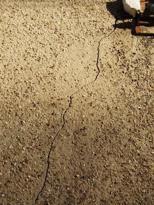
It was a cracking good summer…
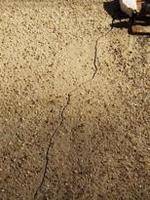 Sunshine, barbeques, Pimms, hot days and balmy evenings. Then there’s the hot-and-bothered parents, impatient drivers, worried gardeners and hosepipe bans.
No-one can have failed to notice that we had a hot and dry summer this year, and this followed two relatively dry winters and springs, leading to drought conditions in parts of England in 2005 and 2006.
The incidence of dry summers has been more frequent recently, the most extreme being 1976, 1989, 1990, 1995, 1996 and 2003. In 2003 the UK experienced its hottest summer temperatures to date.
The Environment Agency says that the UK is experiencing its driest spell since 1976 and for most of us it was a “cracking good summer”. But our houses are not so happy, and the cracks may soon begin to show.
Why buildings crack
There are lots of reasons why cracks appear in buildings. The most common are poor design or materials, deterioration and neglect, thermal movement of the structure, and ground movement. Of these, the most serious is a change in ground conditions (usually “drying out” in years like this) causing subsidence.
Subsidence is the downward movement of the ground supporting a building. It can be caused by:
A change in water levels in the soil, especially in clay
Trees and shrubs close to buildings, and their search for water
Leaking drains washing the soil away from under foundations
Trees and shrubs are responsible for 70 per cent of subsidence, since their need for water from the soil reduces the natural water table, especially when the ground is already too dry through lack of rain. And as the soil dries out, it loses part of its load-bearing capacity. The thirstiest trees are Eucalyptus, Oak, Laylandii, Cypress, Poplar and Willow. Some deciduous trees can consume 10,000 gallons of water in a year.
Subsidence is most common in houses built before 1965, especially those built in the Edwardian and Victorian period. The standards for foundations and awareness of subsidence have greatly improved since then.
What are the symptoms?
The first obvious sign of subsidence is cracks appearing around the house. However, not all cracks are due to subsidence. New properties and recent extensions get minor cracks as the building gradually and quite normally dries out, and elements of buildings, especially wood, swell and shrink as they get wetter or dryer.
The cracks to be more concerned about are diagonal cracks which appear in internal plasterwork or external brickwork, most usually around doors and windows, or near a corner of a building. You might also notice doors and windows beginning to “stick” as their frames twist a little, or rippling of wallpaper that indicates movement beneath. Any crack of over 3mm, about the thickness of a 10p coin, should be investigated by a surveyor, and it would be wise to take advice as soon as any new cracks appear.
What should be done about it?
Though it can become a serious problem, this is mercifully rare and there is no need to panic. Your first step should be to contact your insurers, who will send their own assessor or ask you to obtain a suitable surveyor’s report. They will consider, and if necessary test, the ground conditions, check drains, consider trees nearby, and look for any other clues as to the cause. They will then recommend what should be done.
Often their advice will be to do nothing immediate, but to wait for wetter weather and monitor the cracks. It is not uncommon for cracks to completely disappear as the water table returns to its normal level and the ground returns to its normal strength. If monitoring is needed, they will place special marks known as “tell-tales” on the wall and measure any changes over months, or even years. They may recommend removal or pruning of trees and shrubs, but taking action yourself is not advised since this can create other problems if not done carefully.
What about under-pinning?
Under-pinning is where the soil is taken out from under the foundations or walls of the building, and a more solid base, usually concrete, is substituted. It has to be done carefully by specialist firms. This is both expensive and a considerable disruption. This was a solution much favoured after the 1976 drought but is now only used as a last resort. Minor repairs can deal with most problems, and the position then monitored.
How common is the problem?
In 1995, the insurance industry spent £326m on subsidence claims.
In 2003, £350m
In 2004, £199m
In 2005, £292m
What will it cost you?
Home Insurance policies generally cover the risk of subsidence, with the owner having to pay an excess of the first £1,000. Check your policy for details of this, and for the procedure to follow if you think you have a problem.
Where can you get further advice?
The Subsidence Claims Advisory Bureau (01424 733727) has a free telephone advice service to the public.
There is a RICS leaflet “What every property owner should know”. (0870 3331600 or rics.org/subsidence)
Your local surveyor will also be happy to advise you on any worries you have about the structure or maintenance of your home. You can find one through ricsfirms.com
And the future?
Global warming has, and will continue to have, effects on many aspects of our lives. On average, our recent summers have been hotter and drier than in previous years. Modern methods of construction and Building Regulations have been ever more stringent since the early 70s and so problems with houses built since then will be less prevalent.
Nevertheless, householders must remain wary of “a cracking good summer”.